As an Amazon Associate I earn from qualifying purchases. This article contains affiliate links that may earn a commission at no extra cost to you.
Why Fall Layering Gets Tricky When You’re Plus-Size
When the weather turns crisp, layering is the smartest way to stay warm. But if you carry a little extra, bulky knits and heavy coats can pile on visual size you never asked for. The trick is not to wear more, but to wear smarter. Thin, well-fitted layers trap warmth while keeping a clean silhouette. These eight techniques give you the cozy autumn look you want without the bulk, and they work for every body type.
1. Start With a Thin, Fitted Base Layer
Your base is everything. A thin thermal top, a lightweight long-sleeve tee, or a fitted turtleneck in a stretchy knit creates a smooth foundation that lays flat under everything else. Skip thick fleece or chunky gym tops as a base, they add inches before your outer layer even goes on. Choose heat-trap performance fabrics or thin merino wool that hold warmth without the volume. A fitted base lets your cardigan or coat read as one clean line instead of stacking bump over bump.
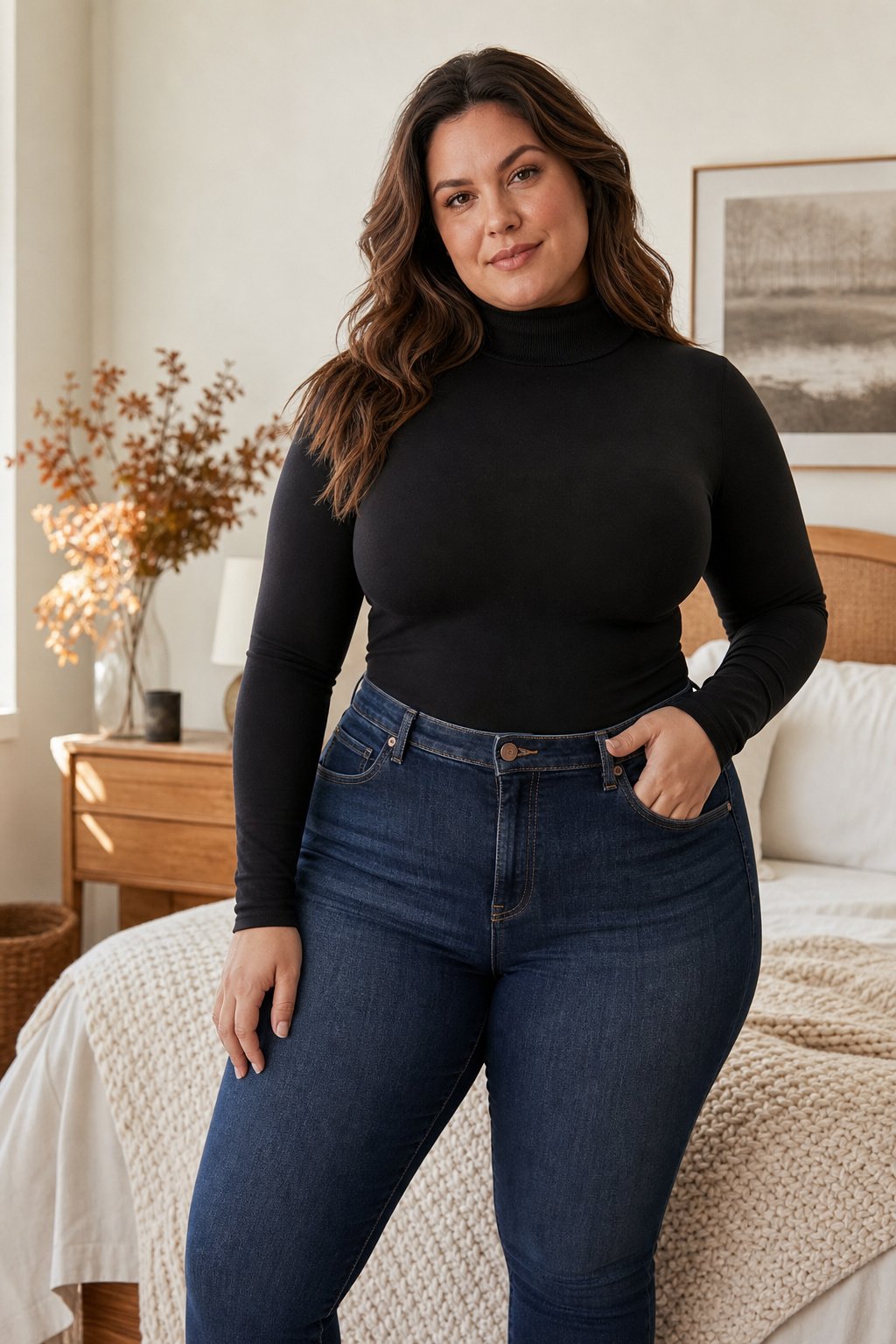
Wear it: pair a fitted black thermal with a bright scarf near the face so the color sits where it flatters most.
Fitted Thermal Base Layer Tops for Women
A thin, heat-trapping base layer is the whole trick, it keeps you warm without adding a millimeter of bulk.
2. Choose Longline Cardigans Instead of Chunky Knits
Nothing says bulk like a cable-knit sweater that ends at your hips with a hip-skimming line. Swap it for a longline cardigan that falls past the hip to mid-thigh. The vertical line visually lengthens, and an open front creates a flattering frame around your outfit instead of adding a wall of yarn. Look for cardigans with a bit of drape, not stiff or padded shoulders. Keep the knit fine and the fit relaxed, not oversized.
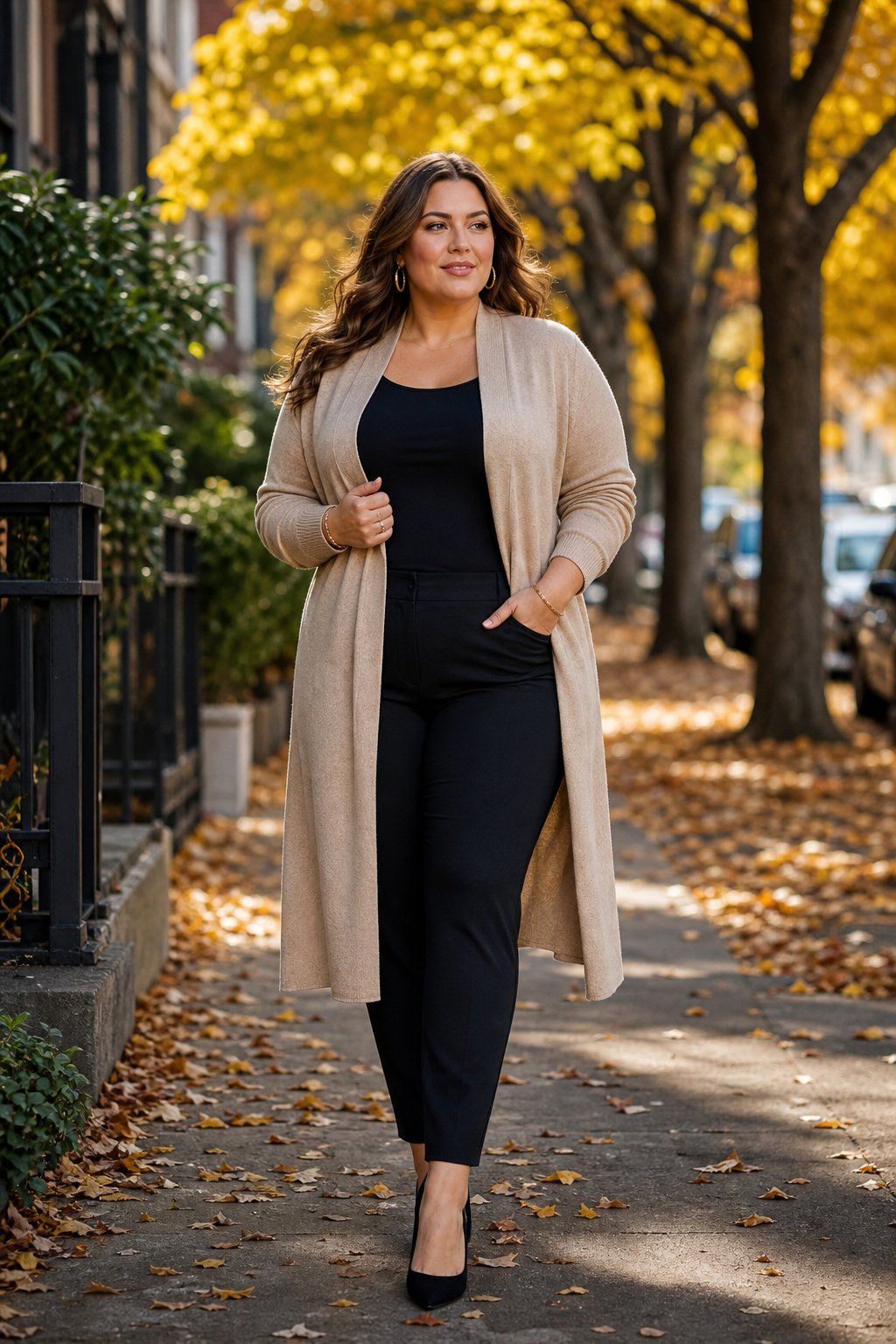
Wear it: belt the longline cardigan at your natural waist and let it fall open below, a two-way line that never reads boxy.
Longline Cardigans for Women
A longline cardigan that drapes past the hip lengthens your line and replaces bulky chunky knits.
3. Trap Heat With a Proper Coat, Not More Layers
Instead of stacking three tops, pick one well-made coat that does the heavy lifting. A wool-blend wrap coat, a long parka, or a tailored trench keeps out the cold alone, so you only need a thin layer underneath. This one-knockout approach cuts bulk better than anything. Make sure the coat fits through the shoulders and has room over your base layer without pulling. A coat that fits well and closes easily always looks sleeker than one that fights your layers.
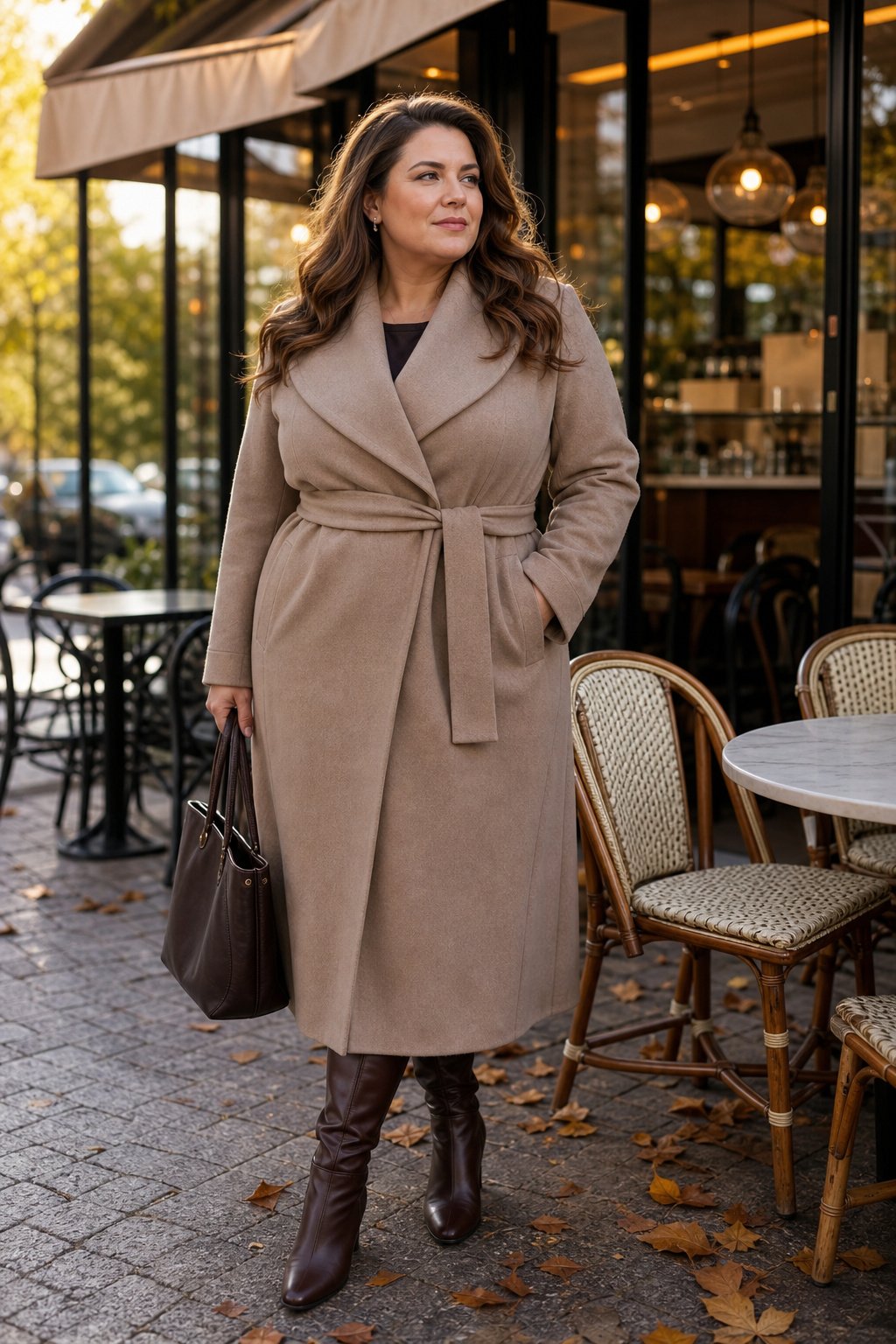
Wear it: an A-line or flare coat adds movement at the hem and skims the hips for a graceful, roomy line.
4. Keep the Front Open to Preserve a Clean Silhouette
An open layer in front creates a narrow, vertical panel of color down the center of your body, which instantly reads as slimmer and longer. Instead of buttoning a cardigan or jacket all the way, leave it open over a solid, fitted piece. This reveals your true shape beneath while the open sides gently frame it. Same for a shacket or flannel. The effect is visual airflow, and it removes that wrapped-in-blanket look before it starts.
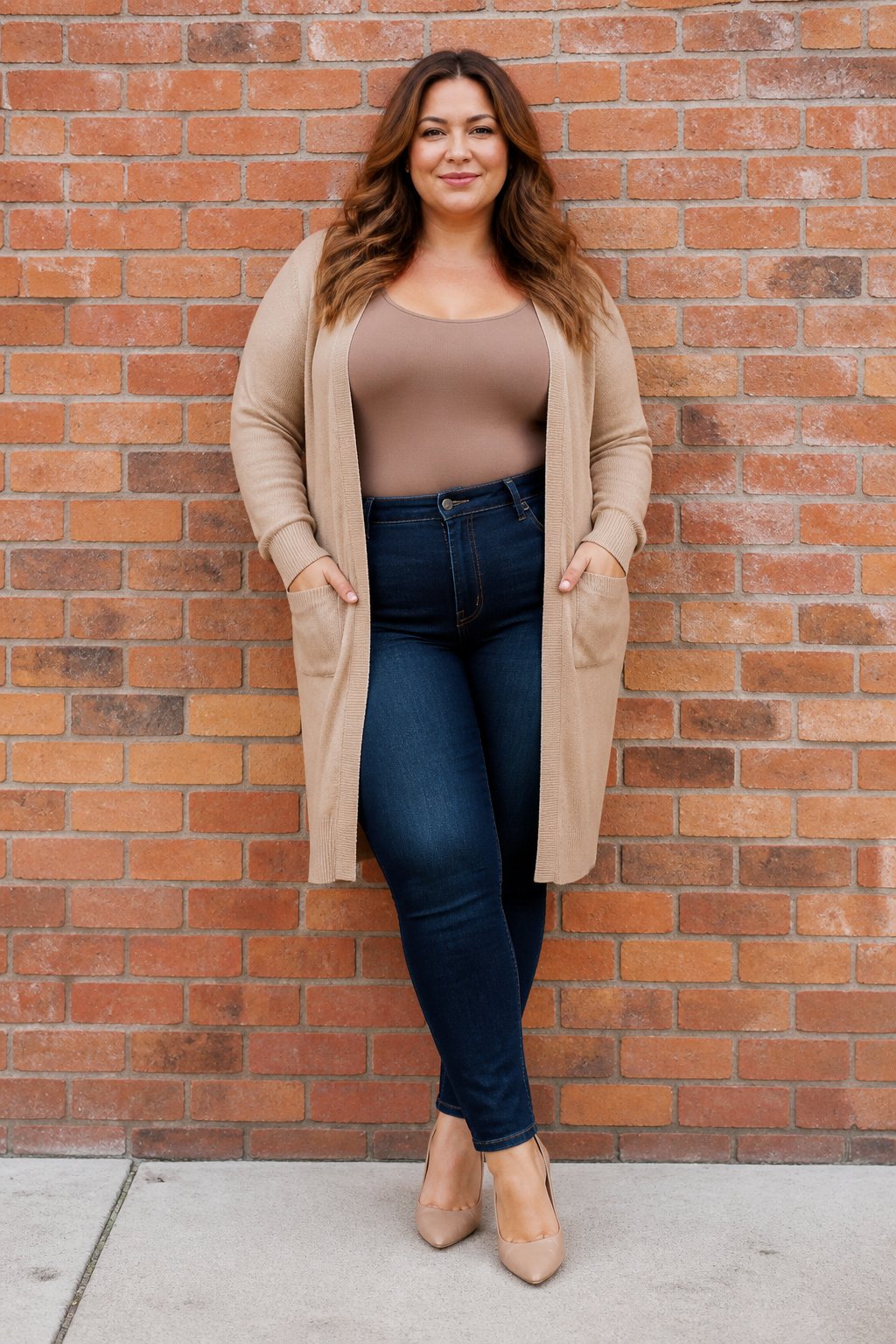
Wear it: match the open layer’s tone to your top so the center column reads as one clean stripe of color.
5. Play With Texture Instead of Thickness
You can keep the cozy feel with zero bulk by mixing textures of thin fabrics. Pair a smooth satin blouse with a ribbed knit cardigan, or a brushed cotton shirt with a wool-blend vest. Contrasting textures add visual interest and that layered, expensive look without a single thick fiber. Fine-gauge knits, jersey, silk, and soft cotton all hold warmth differently, and combining them reads as depth and polish. Thin does not mean cold when the layers are layered well.
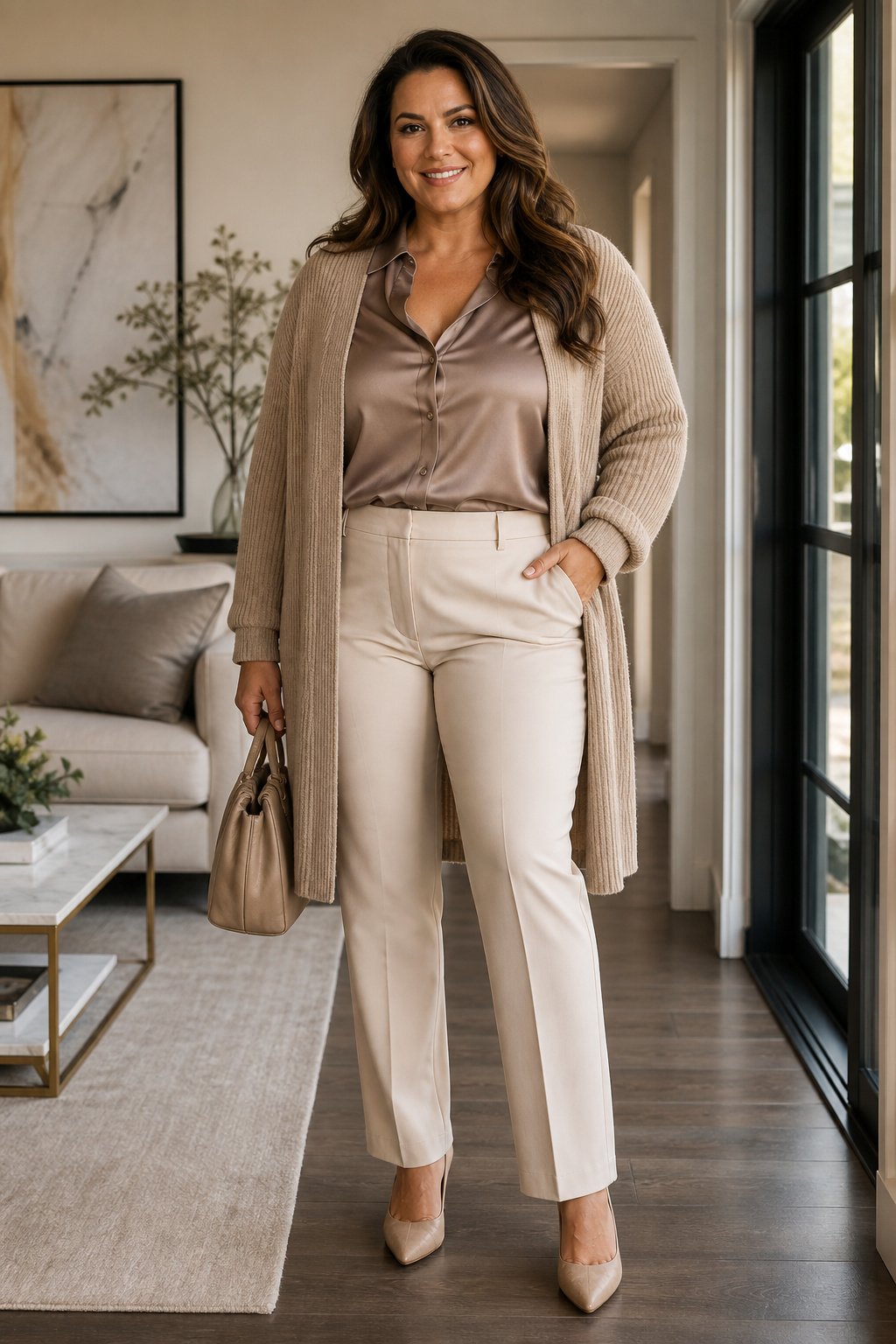
Wear it: a fine-gauge knit over a silk or satin top is the trickiest-looking, warmest thin combination you own.
6. Tuck, Cuff, and Define Your Waist
Details that create a defined line are your best friends. Tuck a thin top into high-rise trousers to show your waist. Roll sleeves to the elbow to end the layer at a flattering point. Add a thin belt over a shirt or dress to break the column of fabric. These little signals give your shape structure that a jumble of loose layers never will. Definition is the opposite of bulk, and a defined waist instantly reads as polished and intentional.
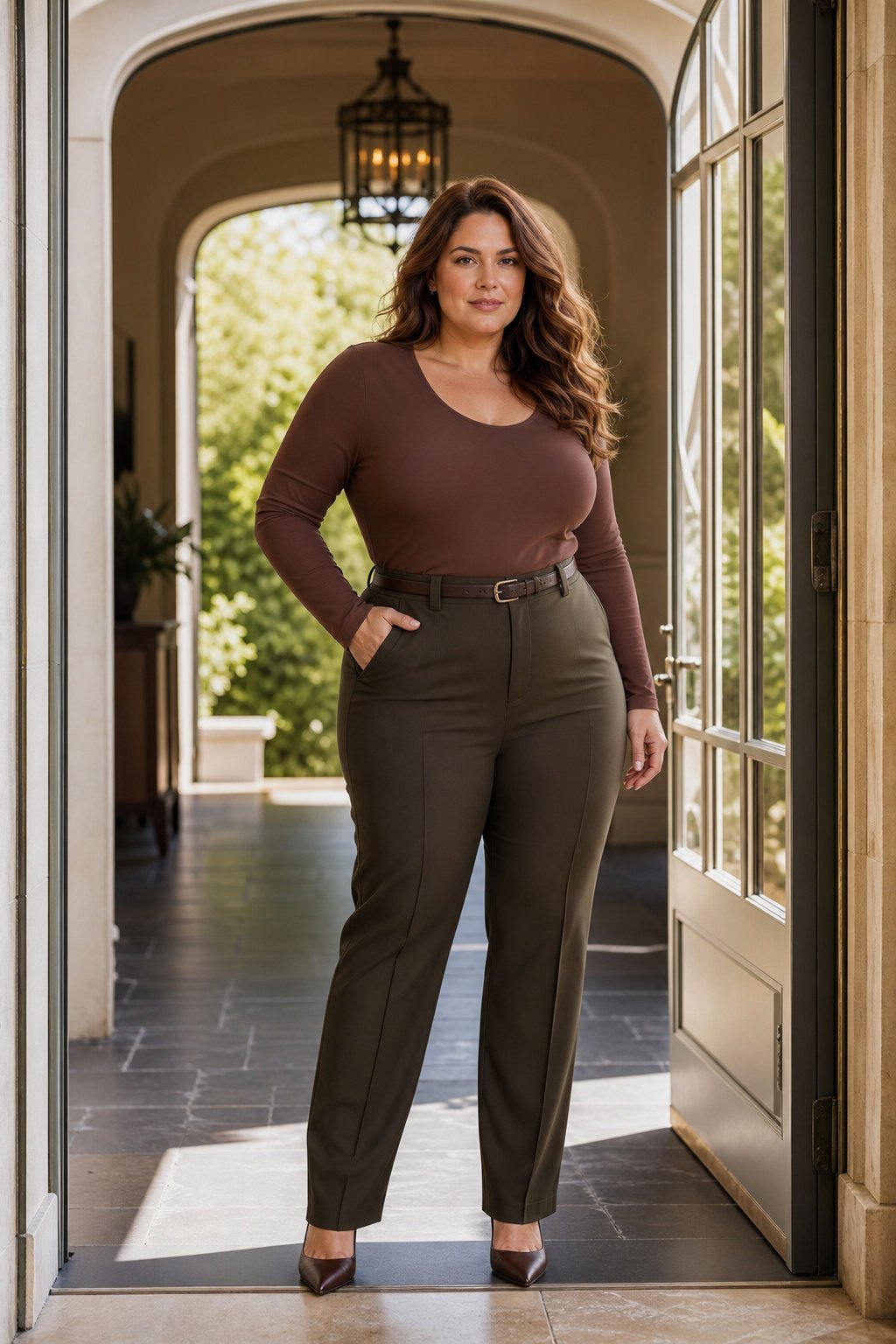
Wear it: a thin belt in a contrast tone acts as a fast, forgiving waist definition that never feels tight.
Fashion Belts for Women
A thin belt at your natural waist instantly defines your shape under any fall layer.
7. Balance Proportions: Slim on Top When Full on Bottom
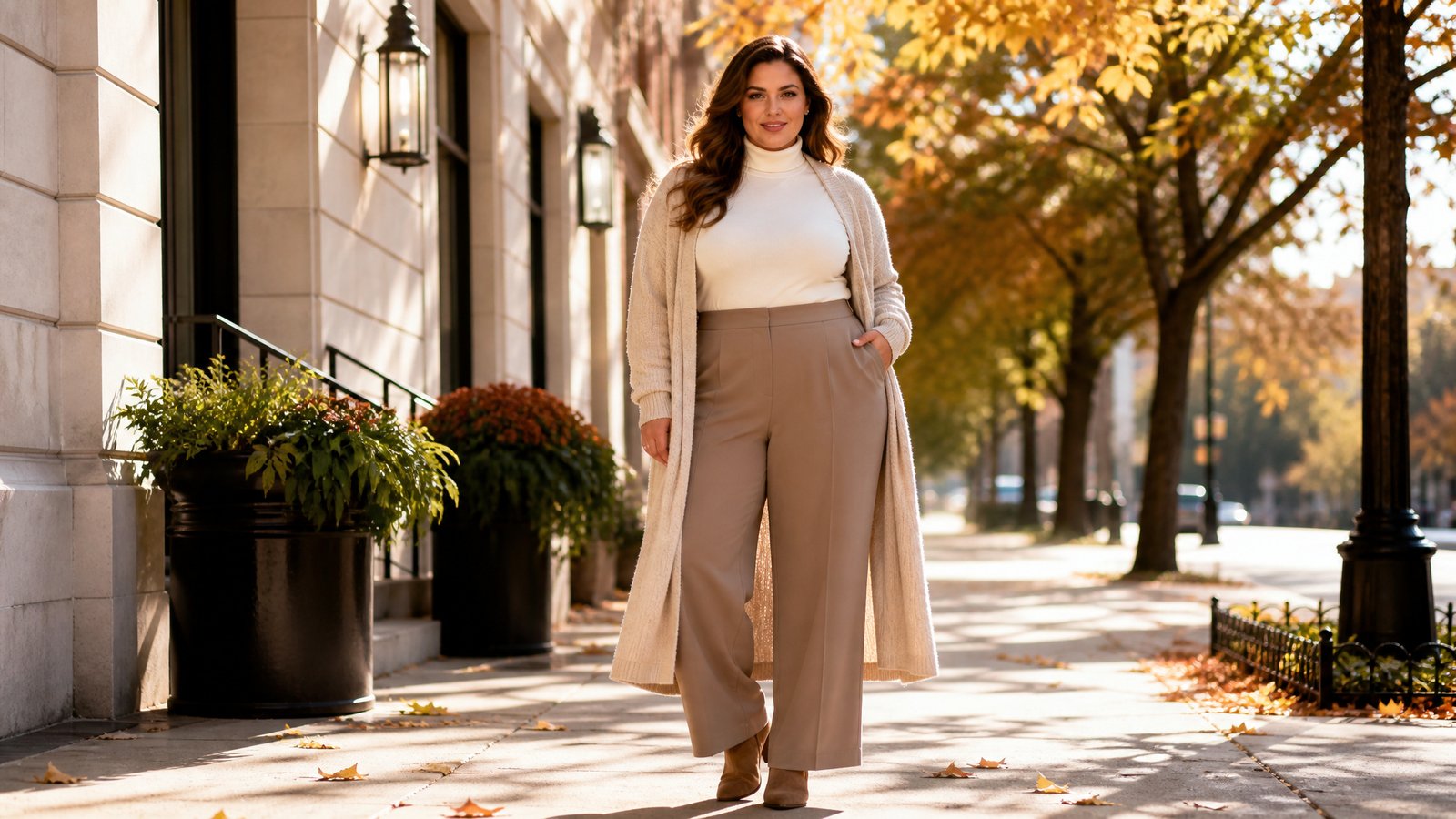
Fall loves wide-leg trousers, straight jeans, and roomy skirts. When your bottom half is full volume, keep your top half sleek and fitted, a slim merino turtleneck or a lightweight fitted blazer under a thin coat. The contrast keeps the whole outfit in balance. Reverse it when you want a roomy, cozy top, pair it with slim or straight-leg denim. One loose and one fitted half is the timeless proportion rule that keeps any silhouette looking put-together rather than overwhelmed.
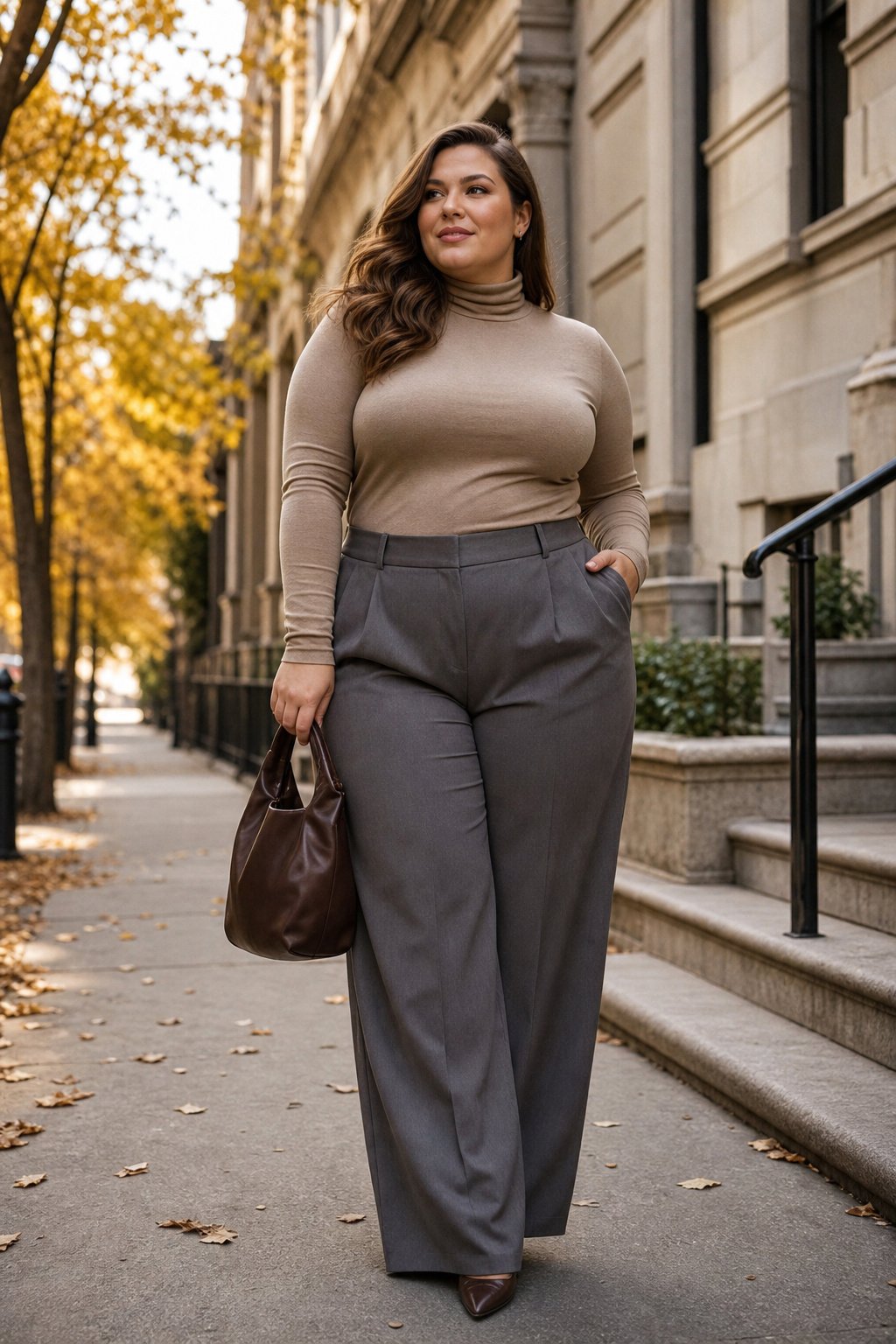
Wear it: a fitted longline cardigan over wide-leg trousers is an easy, elegant Saturday look all fall.
Wide Leg Trousers for Women
Wide-leg trousers pair beautifully with a fitted top to keep fall proportions balanced and flattering.
8. Choose the Right Fabrics and Weights for Every Layer
The weight and drape of a fabric decides whether a layer flattens you or puffs around you. Look for fabrics with movement: fine wools, viscose blends, jersey knits, and brushed cottons. Avoid stiff, boxy, or overly padded outerwear, and skip anything that stands away from the body on its own. Hold each piece up and check if it drapes, not tents. A layer that follows your natural shape, however subtle, will always look more refined than one that fights it with structure.
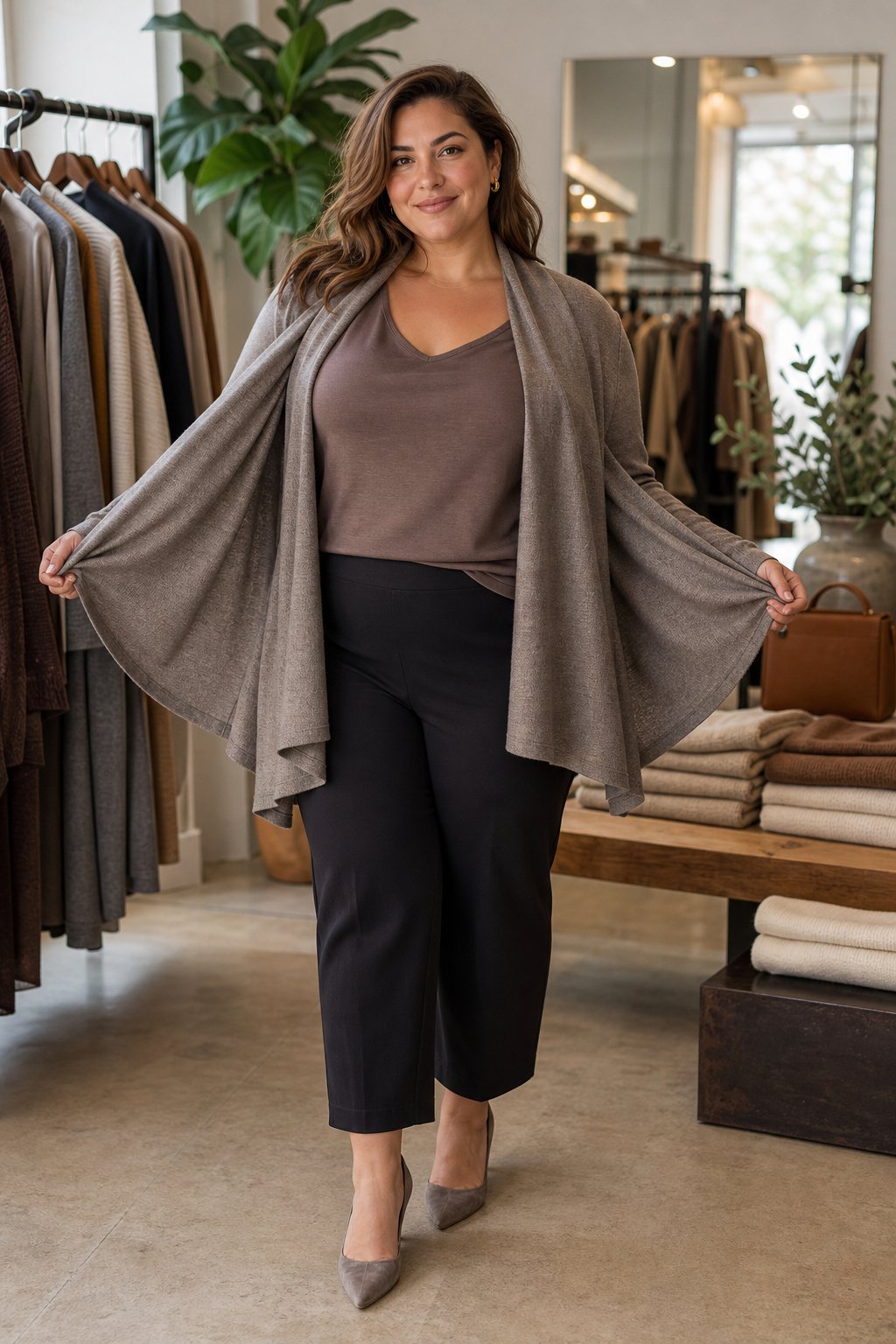
Wear it: if a layer stands away from your body when you hold it up, leave it on the rack, it will only add width.
Build a Fall Layer Wardrobe That Fits You
Layering without bulk is less about how many pieces you wear and more about how they fit and fall together. Start with a thin base, choose drape over volume, keep the front open, and let one good coat carry the warmth. Define your waist, balance your proportions, and favor fabrics that move. When every layer does its job without shouting, you stay warm and look effortlessly polished all season. That is the trick, and it is easier than it looks.