
Over 70% of men confess to feeling uncertain when styling a blazer for casual settings, but you can master this forgotten art. Consider the jacket as a strategic bridge, not a relic—its structured shoulders transform your silhouette, while a breathable linen or wool weave grounds it in reality. The key lies in respecting your body’s architecture, tailoring that second-skin fit, and pairing it with dark denim or polished chinos. You’ll soon see how a crisp pocket square and matching leather shoes turn uncertainty into quiet confidence.
Why the Blazer Is the Smart Business Casual MVP
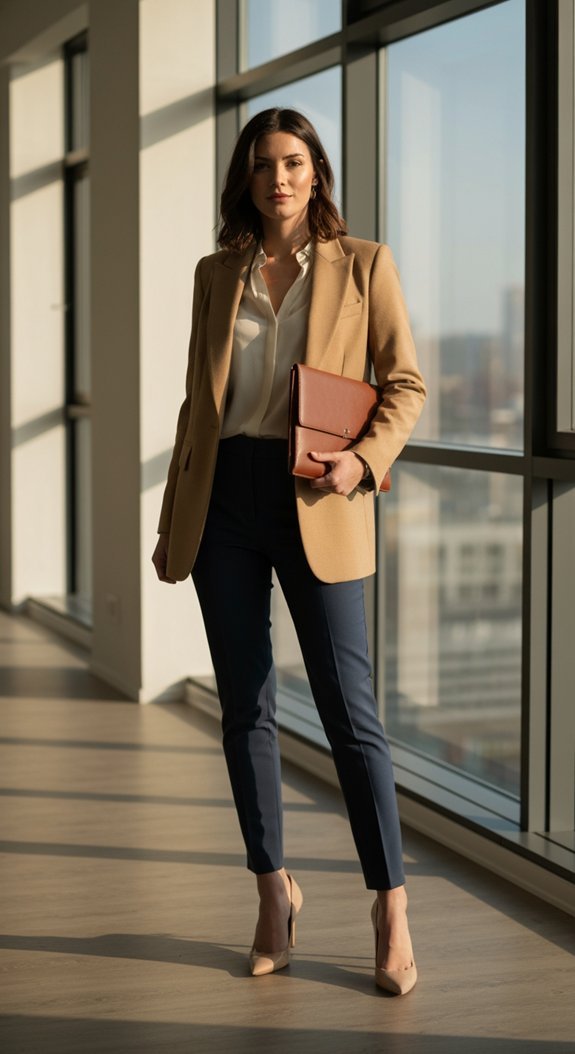
Because it effortlessly bridges the gap between the formality of a suit and the relaxed vibe of a sweater, the blazer has earned its crown as the undisputed MVP of smart business casual.
You’re not just throwing on a jacket; you’re wielding a tool of transformation.
Its rich blazer history stretches from naval uniforms to modern boardrooms, carrying a legacy of quiet authority you can literally feel on your shoulders.
Now, apply some color theoryblazer history, color theory: a deep navy whispers competence against your crisp white shirt, while a forest green invites approachability without sacrificing an ounce of gravitas.
Picture the fabric’s subtle sheen catching conference-room light, the structured line carving a sharp silhouette from your collarbone to your hip.
You command the room before you even speak, because this isn’t merely an outfit choice—it’s a strategic statement of your intent.
How to Pick a Blazer Fit for Your Body Type and Smart Casual Needs
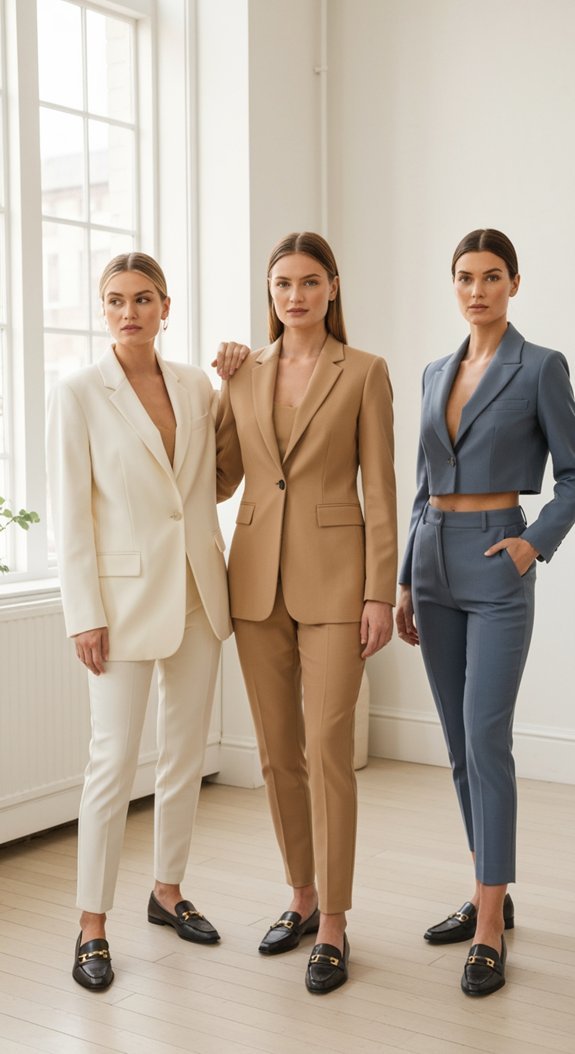
Fit isn’t about squeezing into a blazer that looks good on the hanger—it’s about finding the one that honors your body’s architecture, draping like a second skin rather than a borrowed shell.
For a lean frame, you’ll want a trim, structured silhouette that skims your torso without gaping, while broader shoulders demand a relaxed cut through the chest, then a clean taper at the waist.
Pay close attention to the shoulder seam: it should align perfectly with your natural shoulder point, never drooping or tight.
S blazer patterns like subtle glen plaid or pinstripes can add visual interest without overwhelming your shape.
Then, consider blazer tailoring—a slight sleeve shortening or waist suppression transforms a decent fit into a sublime one.
You aren’t wearing a uniform; you’re curating a second career armor.
Best Blazer Fabrics for Every Season and Setting
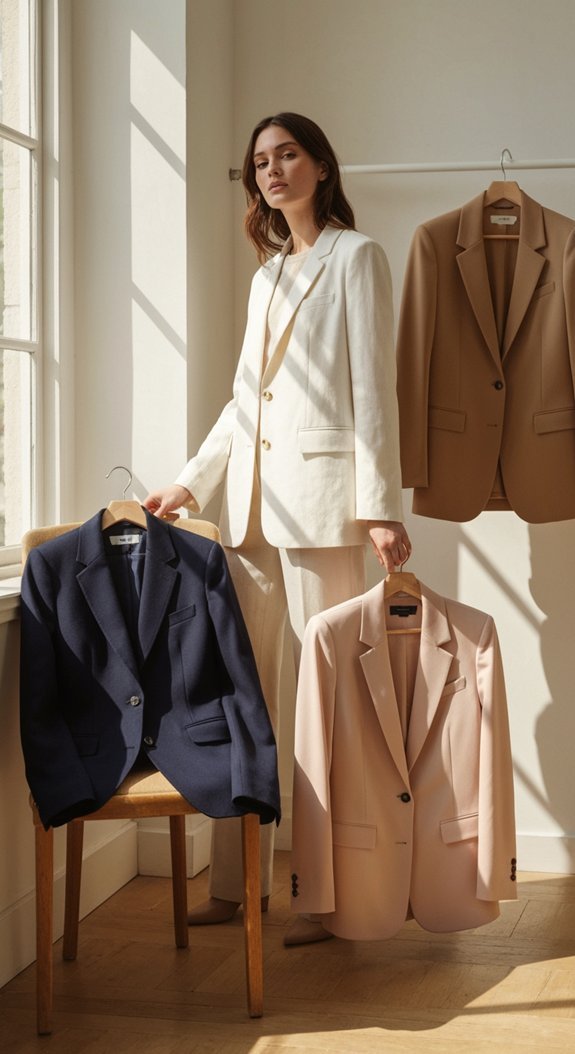
While the cut of your blazer determines its architecture, the fabric dictates its soul—and choosing the wrong one is like wearing a wool overcoat to a beachside wedding, a silent clash between intention and environment.
For summer’s heat, reach for a breathable linen or cotton-linen blend; its natural wrinkles speak of relaxed confidence, perfect for a seaside client lunch.
As autumn’s chill arrives, embrace a heavier wool or tweed, whose seasonal texture adds rich depth to a charcoal trouser.
Spring calls for mid-weight cotton or a silk-wool mix, offering a crisp drape that moves with you.
Always consider pattern coordination: a tweed’s herringbone demands a simple shirt, while a solid linen blazer allows for a bold gingham pocket square.
What to Wear Under Your Blazer: Shirts, Turtlenecks, Tees
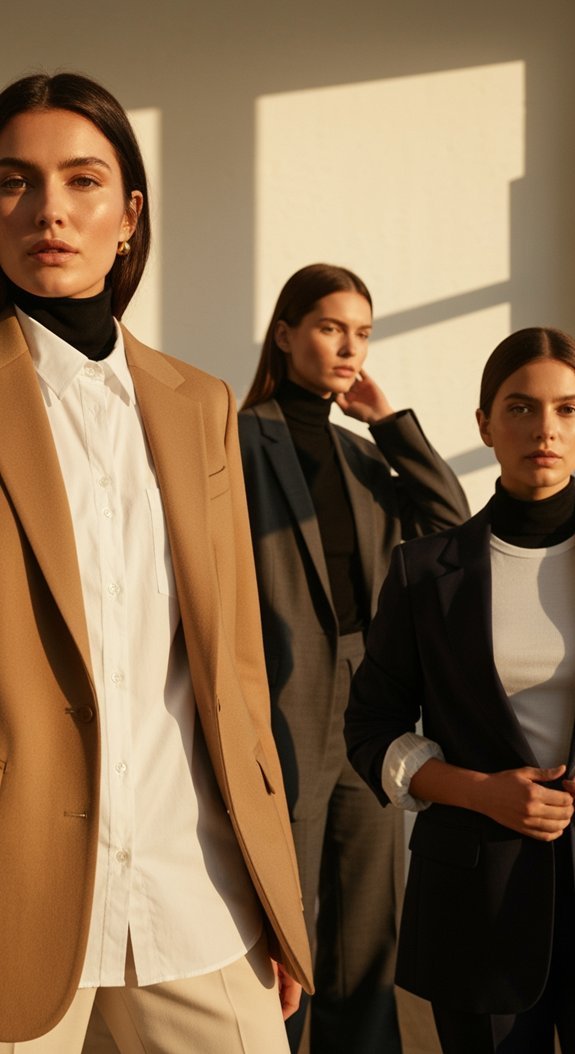
How do you choose what to wear beneath that carefully selected blazer, the fabric of which you’ve already mastered for the season? Your foundation sets the entire mood.
A crisp, white Oxford shirt offers a timeless collar, its starched edges peeking out for a sharp contrast.
For cooler days, a fine-gauge turtleneck in charcoal or navy creates a sleek, uninterrupted line, perfect for fabric layering against a textured tweed.
Want to inject personality? A simple, high-quality cotton tee—heather grey or deep burgundy—works wonders.
Embrace color blocking by pairing a black blazer with a merlot tee.
You’re not just dressing; you’re composing an outfit where each layer speaks to the next, from the soft whisper of cashmere against wool to the bold statement of a silk blouse beneath a structured shoulder.
Pair Blazers With Jeans Without Looking Sloppy
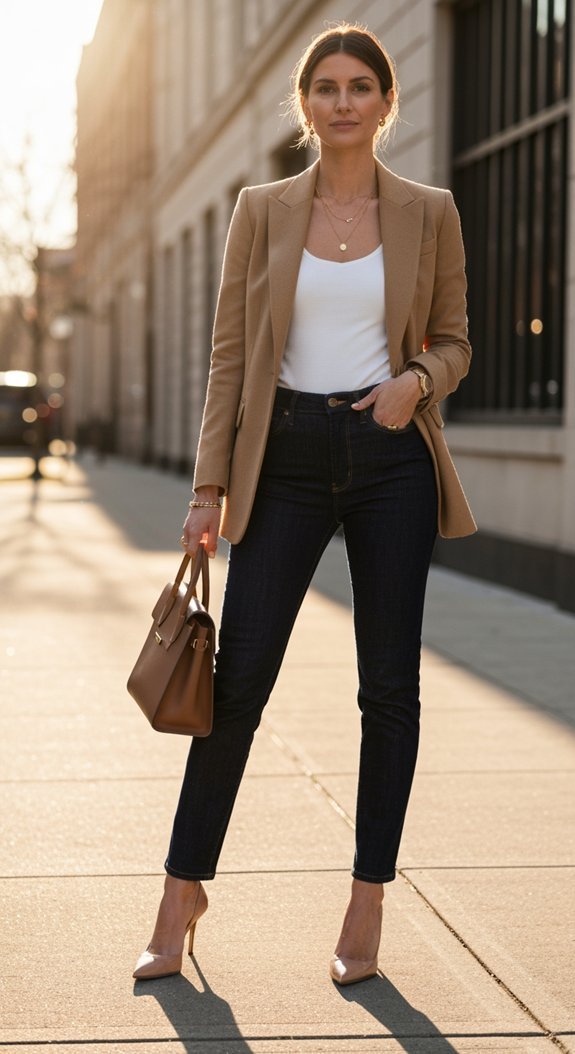
When you’ve already built the foundation of your outfit with a carefully chosen shirt, turtleneck, or tee, the next step is to anchor that polished top half with the right pair of denim, transforming the blazer from a formal relic into a statement of relaxed sophistication.
Opt for a dark, raw jean texture to preserve a sharp silhouette; the matte finish resists wrinkles and catches light with a subtle sheen, preventing any hint of sloppiness.
Then, apply colorblocking coordination: let your blazer contrast with your jeans’ indigo, perhaps a charcoal blazer against a midnight wash, creating a deliberate, visual boundary between structured tailoring and casual fabric.
Cuff the hem once to reveal an inch of ankle, and you’ll maintain the blazer’s tailored line without descending into dishevelment. This is elegance redefined.
Style Blazers With Chinos for a Polished Office Vibe
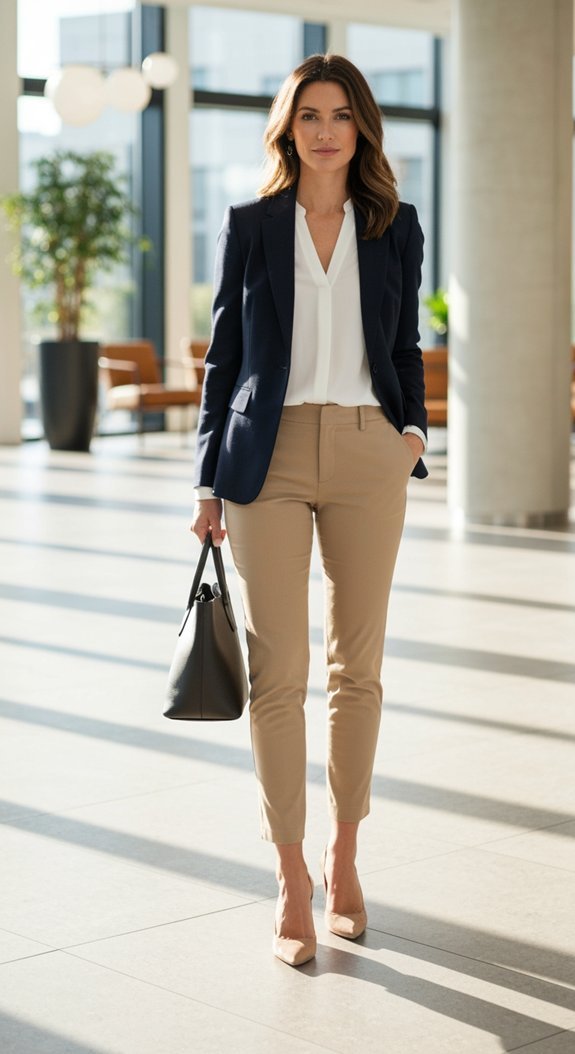
Why let chinos languish as mere weekend wear when, with the right blazer, they can elevate your office presence into a study of quiet authority?
Start by anchoring your look in a thoughtful chino color palette—stone, khaki, or navy—and pair it with a blazer in a contrasting shade, like charcoal or camel. This creates a deliberate, sophisticated silhouette that commands attention without shouting.
For blazer pocket styling, slip a crisp white pocket square into the breast pocket, folding it with a clean, straight edge; this small gesture adds a note of precision and polish.
Guarantee your blazer fits snugly at the shoulders and drapes cleanly over the chinos, avoiding any bunching.
The result is a refined harmony, where structured tailoring meets relaxed fabric, and you stride into the office radiating effortless, credible authority.
Make certain your blazer fits snugly at the shoulders and drapes cleanly over the chinos, avoiding any bunching.
Finish the Look: Shoes and Accessories That Work
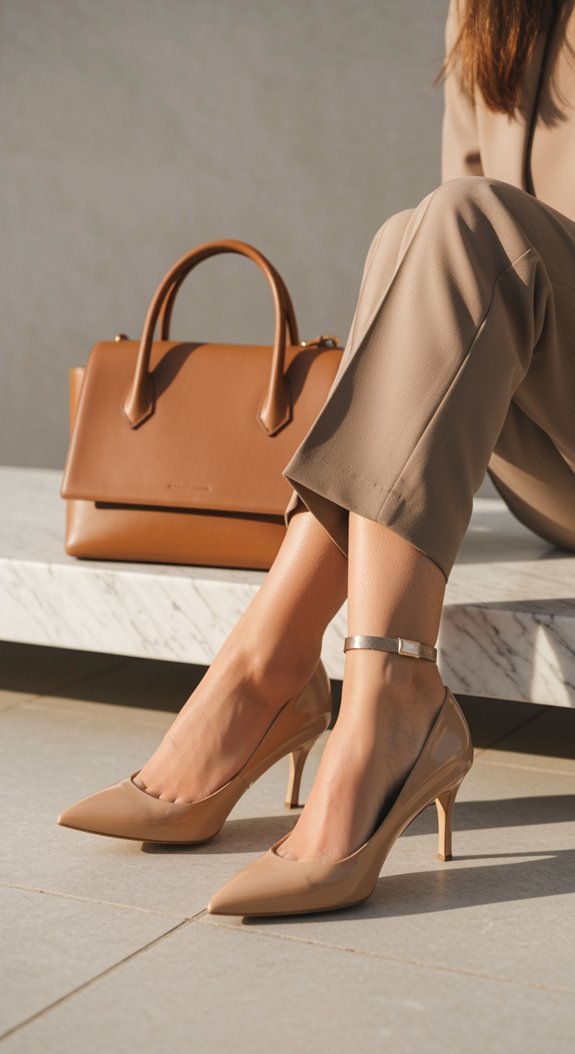
No accessory speaks louder than the shoes, so swap your weekend sneakers for a pair of burnished leather oxfords or loafers in dark brown or black—their gleaming finish anchors the entire ensemble with a grounded, intentional weight.
For a softer step, slide into polished brleather loafers that catch the light like worn mahogany; they whisper effortless sophistication without shouting.
Now, add a woven leather belt that mirrors your shoe’s hue, cinching your waist to sharpen the silhouette.
Your neck needs attention too—drape a silk or cashmere patterned scarf loosely around your collar, letting its geometric or paisley motifs inject subtle personal flair against the blazer’s solid expanse.
Finally, slip on a minimalist leather watch with a clean face; it’s the quiet punctuation mark that completes your narrative of understated power.
Each piece should feel deliberate, never accidental.
The Most Common Blazer Mistakes (and How to Fix Them)
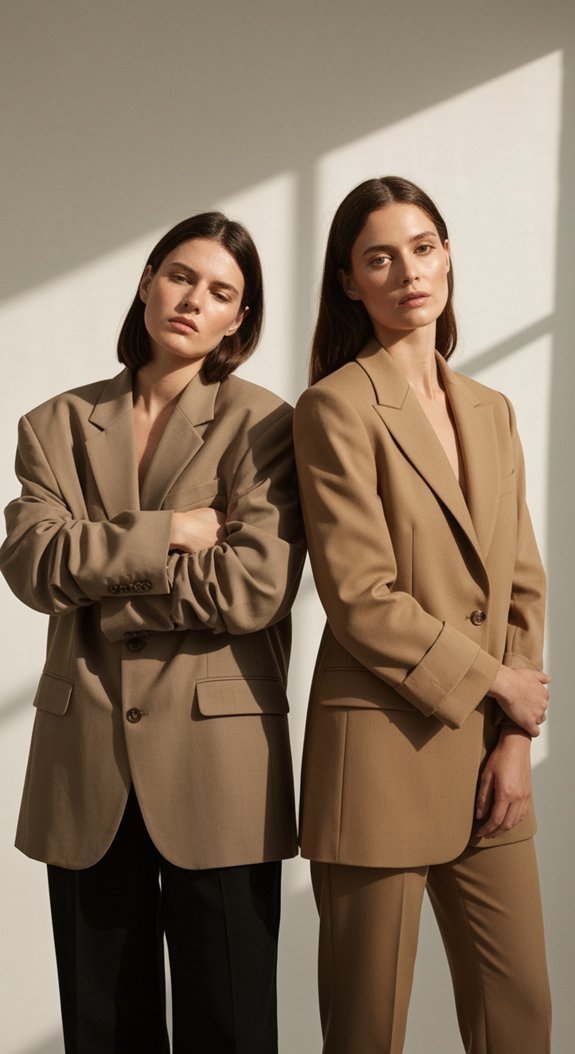
Two blunder-laden pitfalls plague even the most confident dressers: the boxy, oversized blazer that drowns your frame and the sacrilege of leaving the sleeves unhemmed, letting the jacket’s clean lines fray into a sloppy disarray.
You must prioritize blazer tailoring; a sculpted shoulder and a tapered waist transform shapeless fabric into a powerful silhouette.
Avoid clashing blazer color and pattern like a thunderstorm of clashing plaids; instead, anchor a textured tweed blazer with solid, dark trousers.
For blazer layering, never let a thick sweater strain the jacket’s buttons—opt for a slim merino crewneck or a light silk shell.
Remember, a blazer isn’t armor; it’s an extension of your poise.
With precise cuts and harmonious hues, you’ll command every room you enter.
Build a Versatile Blazer Wardrobe on Any Budget
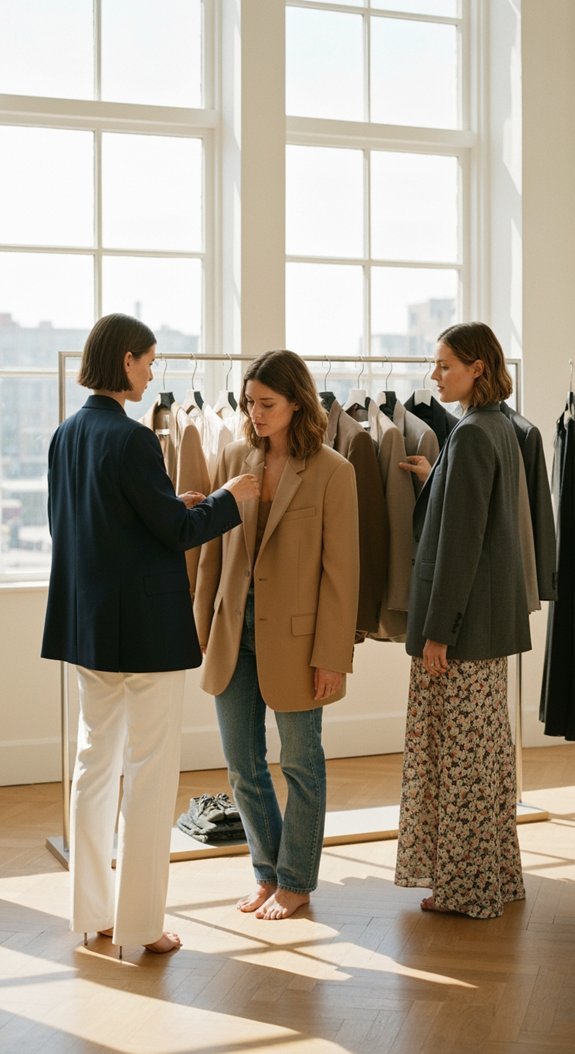
You’ve learned to sidestep the pitfalls of oversized cuts and unhemmed sleeves, so now it’s time to build a blazer wardrobe that works as hard as you do, without breaking the bank.
Start with a single, impeccable budget blazer in charcoal or navy—a neutral anchor that transforms jeans into polished statements.
Add a second, lighter shade like taupe, and you’ll instantly double your outfit combinations.
For your blazer budget, focus on fabric: a wool-blend breathes like a tailored whisper, while a cotton-linen mix drapes with effortless grace.
Spend wisely on these two pillars, and let thrift stores or end-of-season sales fill the gaps.
You’ll stitch together a collection that bridges Monday meetings and weekend dinners, each piece a quiet investment in your own sophistication.